
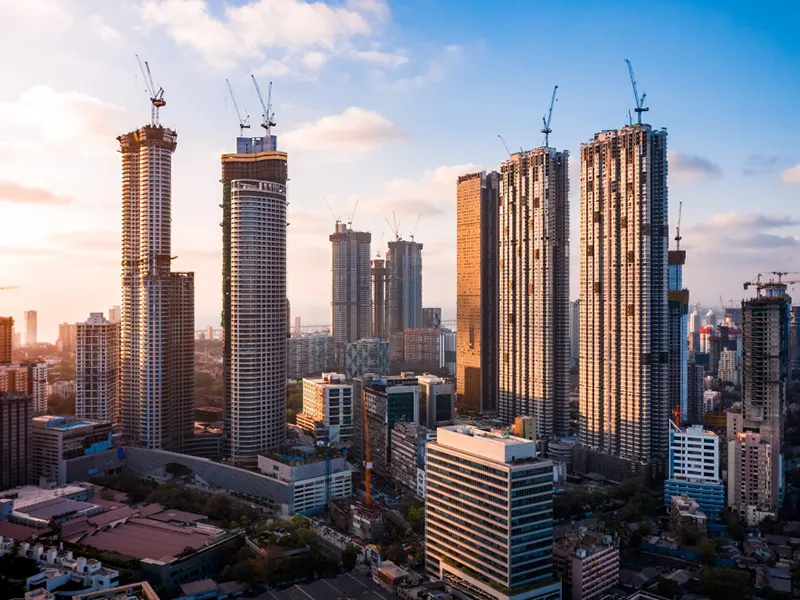
Kenya: East Africa’s Construction Powerhouse
Kenya stands at the epicenter of one of the most exciting construction booms in Africa. As the largest economy in East Africa and a regional hub for finance, technology, and commerce, Kenya’s construction sector has become a critical driver of national economic growth and urban transformation.
With a rapidly expanding population, accelerating urbanization, and massive government investment in infrastructure, the country presents enormous opportunities for construction companies that combine international standards with local market expertise — exactly the model that Ahalyna Group brings to East Africa.
Market Size and Growth Trajectory
Kenya’s construction industry has demonstrated remarkable resilience and growth over the past decade:
- GDP Contribution: The construction sector consistently contributes approximately 7-8% of Kenya’s GDP, making it one of the fastest-growing sectors in the economy.
- Annual Growth Rate: The industry has maintained growth rates between 6-12% annually, outpacing many other economic sectors.
- Employment: Construction directly and indirectly employs millions of Kenyans, serving as one of the country’s largest job creators.
- Foreign Investment: Kenya continues to attract significant international investment in construction and real estate, driven by its stable business environment and strategic location.
Key Drivers of Growth
1. Rapid Urbanization
Kenya’s urban population is growing at approximately 4% per year — nearly double the global average. Nairobi, Mombasa, Kisumu, and other cities are expanding rapidly, creating massive demand for:
- Residential housing across all segments
- Commercial office and retail space
- Social infrastructure (schools, hospitals, community facilities)
- Urban transportation networks
Nairobi alone is projected to reach a population of over 8 million by 2030, up from approximately 4.5 million today. This growth necessitates the construction of hundreds of thousands of new housing units and supporting infrastructure.
2. Government Infrastructure Investment
The Kenyan government has prioritized infrastructure development as a cornerstone of its economic vision. Major initiatives include:
- Nairobi Expressway: A flagship toll road that has transformed commuting patterns in the capital
- Affordable Housing Program: Government-backed initiative to deliver 250,000 affordable housing units
- Special Economic Zones: Development of industrial and technology parks across the country
- Port Expansion: Continued development of Mombasa Port and the inland container depot network
- Railway Development: Extension of the Standard Gauge Railway connecting major economic centers
3. Real Estate Demand
Kenya’s real estate market remains one of the most attractive in Africa:
- Housing Deficit: Kenya faces an estimated housing deficit of over 2 million units, growing by approximately 200,000 units annually.
- Middle Class Growth: A rapidly expanding middle class is driving demand for quality residential developments with modern amenities.
- Diaspora Investment: The Kenyan diaspora represents a significant source of real estate investment, with many seeking properties that meet international standards.
- Rental Yields: Nairobi consistently offers some of the highest rental yields in Africa, particularly in prime locations like Kilimani, Westlands, and Lavington.
4. Regional Hub Status
Nairobi’s position as a regional headquarters for multinational corporations, international organizations, and diplomatic missions creates sustained demand for:
- Grade A commercial office space
- Premium residential developments for expatriates and executives
- Hospitality and conference facilities
- Mixed-use developments that combine living, working, and leisure
Emerging Trends in Kenyan Construction
Green Building and Sustainability
Environmental consciousness is rapidly gaining traction in Kenya’s construction sector. Developers are increasingly adopting:
- Energy-efficient building designs
- Solar integration and renewable energy systems
- Water harvesting and recycling technologies
- Sustainable material sourcing
- Green building certification (EDGE, LEED)
Advanced Construction Technologies
The Kenyan market is becoming increasingly receptive to advanced construction methods that improve quality and efficiency:
- Post-Tensioning Systems: Delivering stronger structures with significant material and cost savings
- Prefabricated Construction: Reducing on-site construction time and improving quality control
- Building Information Modeling (BIM): Enabling better design coordination and clash detection
- Smart Building Technologies: Integrating IoT sensors, automated systems, and intelligent building management
Mixed-Use Development
The trend toward integrated mixed-use developments continues to accelerate, driven by:
- Land scarcity in prime urban areas
- Desire for live-work-play environments
- Better returns on investment through diversified use
- Reduced commuting and improved quality of life
Challenges and How to Overcome Them
Quality Standards
While Kenya has made significant progress in construction quality, there remains a gap between international best practices and local execution in some segments. The solution lies in:
- Partnering with experienced international firms that bring proven standards
- Investing in workforce training and skills development
- Adopting quality management systems (ISO-aligned)
- Using advanced technologies that reduce reliance on manual quality control
Financing
Access to affordable construction financing remains a challenge, but the landscape is improving:
- Mortgage penetration is growing with government support
- Developer payment plans (12-36 months) are making homeownership more accessible
- Real Estate Investment Trusts (REITs) are emerging as new funding sources
- International development finance institutions are increasing their involvement
Regulatory Environment
Kenya’s regulatory framework for construction is evolving:
- The National Construction Authority (NCA) is strengthening oversight
- Building codes are being updated to reflect modern standards
- County government approval processes are becoming more streamlined
- Environmental impact assessments are now standard practice
Prime Locations for Development
Nairobi
As the capital and economic center, Nairobi offers the most diverse opportunities:
- Kilimani: Premium residential area with high rental demand, close to amenities and business districts. Home to Ahalyna’s Fountain Residency project.
- Westlands: Nairobi’s premier commercial and lifestyle district, experiencing rapid transformation with new developments.
- Upperhill: Emerging as a major business district with significant office and mixed-use development potential.
- Karen and Lang’ata: Upscale residential areas attracting villa and gated community developments.
- Ruaka and Kiambu: Satellite towns experiencing explosive growth in affordable and mid-market housing.
Coastal Region (Mombasa)
Kenya’s second city offers opportunities in tourism-related development, port-adjacent logistics facilities, and residential housing for a growing population.
Western Kenya (Kisumu)
As the third-largest city and a key Lake Victoria port, Kisumu is seeing increasing construction activity driven by infrastructure investment and regional trade growth.
Why International Expertise Matters
Kenya’s construction sector is at an inflection point. As projects become larger, more complex, and more demanding in terms of quality and timeline, the involvement of companies with international experience becomes increasingly valuable.
Ahalyna Group brings to Kenya:
- Saudi Engineering Governance: Disciplined project management and quality systems refined across 30+ projects in the Gulf region.
- Advanced Construction Technologies: Including post-tensioning systems that deliver superior structures at lower cost.
- Integrated Delivery Model: Combining design, engineering, and construction under one roof for streamlined execution.
- Local Partnership Approach: Combining international standards with local market knowledge and workforce development.
The Road Ahead
Kenya’s construction industry is poised for continued growth over the next decade and beyond. The convergence of urbanization, infrastructure investment, technology adoption, and growing consumer expectations creates an environment where quality-focused, innovation-driven construction companies will thrive.
For investors, developers, and homebuyers, the message is clear: Kenya offers one of the most compelling construction and real estate opportunities in Africa. The key is to partner with companies that bring the right combination of international expertise, advanced technology, and local commitment.
Ahalyna Group is proud to be part of Kenya’s construction future, delivering projects that meet international standards while contributing to the nation’s growth and development.
